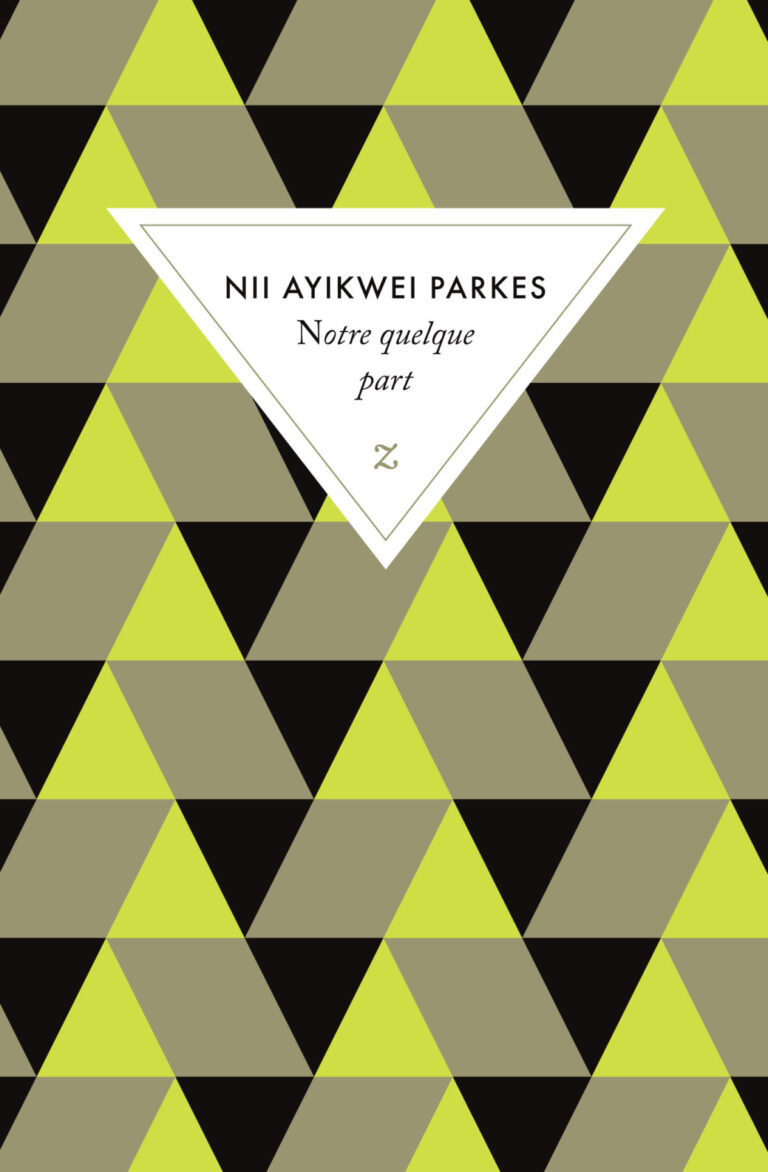
Editorial Summary
A village in the Ghanaian hinterland. Sonokrom, where men and women speak the language of the forest, distil time the way one distils palm wine, and walk alongside the spirits of their ancestors. Then a young woman arrives by car — her eyes, as the old hunter puts it, unable to keep still — and follows a smell into the abandoned hut of a man named Kofi Atta. What she finds there sets in motion two worlds that nothing, at first glance, has prepared to understand each other.
It is Yao Poku, veteran hunter and seasoned storyteller, who takes charge of the narrative. His voice opens the novel the way a griot opens a session — with the promise of telling the story before it grows cold. In Accra, the ambitious Inspector Donkor, a devotee of American crime procedurals, dispatches Kayo to the village: a young forensic pathologist, recently returned from England, carrying his instruments, his scientific training, and the certainty that logic can dissolve even the most inexplicable of mysteries. Kayo arrives. The village listens. And slowly, patiently, the old hunter tells his story.
Tail of the Blue Bird is not quite a detective novel, though it wears the form lightly. What Nii Ayikwei Parkes places in tension is not simply city against village, modernity against tradition — it is the deeper question of what kind of language can hold the truth. The investigation moves forward, but it is the hunter’s voice that structures the novel, envelops it, gives it its particular rhythm. The mystery resolves. The question remains: which story do we choose to tell, and at what cost?
Susu Editorial Note
Tail of the Blue Bird achieves something many novels attempt and few manage: it allows the form of oral storytelling to inhabit the structure of a crime novel without one consuming the other. Yao Poku’s voice is not ethnographic colour — it is the seat of narrative authority, and that inversion is what makes the novel so singular. Parkes came to fiction as a poet and performance artist, and it shows: the prose has the quality of breath, of cadence, of something spoken rather than merely written. Within the landscape of contemporary Ghanaian fiction in English, this novel holds a particular position — one that insists the modern and the ancestral are not opposites, but ongoing interlocutors. The French translation by Sika Fakambi, awarded both the Prix Baudelaire and the Prix Laure-Bataillon in 2014, deserves its own mention: it does not merely translate a text — it transposes a voice.