A Novel You Never Quite Finish Reading
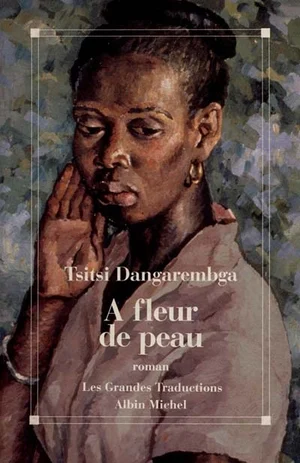
Nervous Conditions, published in 1988 and translated into French as À fleur de peau, is a book I have carried with me for two decades now. I read it once, then a second time, then a third. Each time I came back to it, it gave me something different. As if the novel were growing up alongside me, or rather, as if it had always known things I was taking my time to understand.
Zimbabwe, the late 1960s. Two cousins, two destinies.
Tambudzai, Tambu, grows up on a homestead in colonial Zimbabwe. She wants to learn. She wants to go to school with an urgency that feels like hunger. When her brother dies and a place opens up for her at the mission school her uncle runs, she seizes it with both hands, not yet measuring what she will have to go through in order to stay.
There, she truly meets Nyasha, her cousin and the daughter of her uncle Babamukuru. Nyasha was raised in England and has come back to Zimbabwe with an accent, with books, and with a way of questioning the world that deeply unsettles everyone around her. Nyasha rebels: against her father, against everything expected of her, against the double burden of being a woman and colonised. She pays dearly for it.
What Dangarembga achieves with these two characters is rare: she refuses to rank them. Tambu and Nyasha are not the good example and the bad student. They are two different answers to the same violence. One looks for a way out from inside the system; the other refuses the system altogether. Both are right. Both suffer.
A tension that never resolves
What holds me in this novel is precisely that it does not decide. Tradition is not a simple prison, and modernity is not a promise kept. Education frees Tambu and estranges her in the same breath. Family protects and suffocates in a single movement. Dangarembga writes this ambivalence without ever trying to resolve it, and that is where its whole strength lies.
There is an honesty in this text that hurts, gently. Its women are drawn with a precision that leaves no reader untouched: Tambu and Nyasha, but also their mothers, so different from one another. We recognise women we have known. Sometimes, we recognise ourselves.
Why this novel still matters
Nervous Conditions is often cited as one of the founding texts of anglophone African literature written by a woman. That is true, and the place is fully deserved. But what moves me more is how unsettlingly current it remains. The questions it asks resonate far beyond 1960s Zimbabwe: who has the right to knowledge, at what cost, and at the expense of what.
For me, it also illuminates what I want to do with Susu Éditions. I want to bring into circulation voices that ask these questions without condescension, without exoticism, with the complexity they deserve. Voices like Dangarembga’s do not explain Africa to a Western reader. They write from inside a life, a language, an anger.
The original remains widely available in English. It is the first volume of a trilogy that continues with The Book of Not (2006) and This Mournable Body (2018). For French-speaking readers, Étienne Galle’s translation (Albin Michel, 1991; paperback reissue, L’École des loisirs, 1993) is now hard to find. The third novel, however, is available in French as Ce corps à pleurer (Mémoire d’encrier, 2023). It is a way into a body of work that deserves to be read in full. Read it. Then read it again.